
Posted on Leave a comment

How to Pick Running Shoes Based on Your Foot Strike

Running is the simplest sport in the world until you try to buy shoes. Walk into any running store and you will be confronted with walls of options, each promising to fix something about your form, cushion your landings, and shave seconds off your personal best. The reality is that the right running shoe for you depends mostly on one thing: how your foot strikes the ground. Get that right and most of the marketing noise falls away.

Understanding your foot strike is not as complicated as it sounds. There are three main patterns, and once you know which one you have, you can narrow your shoe search from hundreds of options to a manageable shortlist. Here is the framework.

Heel Strike: The Most Common Pattern

About 80 percent of recreational runners are heel strikers, meaning the outside of the heel hits the ground first before the foot rolls forward to push off the toe. Heel striking is not inherently bad despite what running form enthusiasts claim, but it does generate significant impact forces that travel up through the ankle, knee, and hip. The right shoe for a heel striker needs substantial cushioning in the heel to absorb that impact.

Look for shoes with a higher heel-to-toe drop (8 to 12 millimeters), which positions the heel slightly higher and encourages a more natural foot landing. Maximum cushion shoes from brands like Hoka, Brooks, and ASICS are designed with heel strikers in mind. If you are a heavier runner or run long distances, prioritize cushioning over weight savings.

Midfoot Strike: The Balanced Approach

Midfoot strikers land on the middle of the foot, with the heel and ball of the foot hitting the ground almost simultaneously. This pattern distributes impact forces more evenly than heel striking and is generally considered more efficient for longer distances. Many runners naturally adopt a midfoot strike as they increase their cadence and improve their form.

Midfoot strikers have the widest range of shoe options because they do not need the extreme heel cushioning of heel strikers nor the forefoot emphasis of toe runners. Look for shoes with a moderate heel-to-toe drop (4 to 8 millimeters) and balanced cushioning throughout. Most daily trainers from major brands work well for midfoot strikers. Pay attention to flexibility through the midfoot, since that is where the shoe bends during push-off.

Forefoot Strike and Finding Your Pattern

Forefoot strikers land on the ball of the foot first, with the heel sometimes not touching the ground at all. This pattern is common among sprinters and experienced distance runners who have worked on their form. It generates less impact force but places more load on the calf muscles and Achilles tendon, which can lead to injury if you switch to it too quickly.

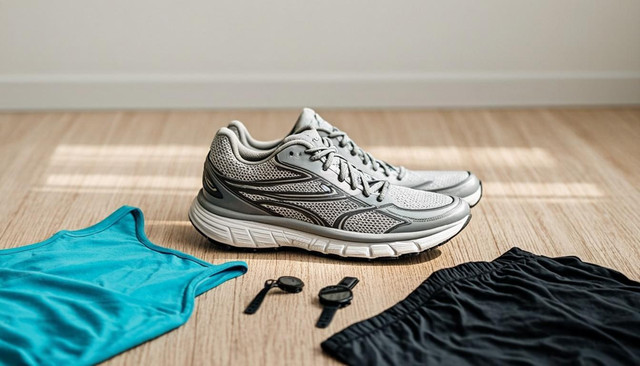
Forefoot strikers should look for shoes with a lower heel-to-toe drop (0 to 4 millimeters) and good forefoot cushioning. Lightweight trainers and racing shoes often work well. To find your own pattern, look at the wear pattern on an old pair of running shoes. Heavy wear at the outside of the heel suggests heel striking. Wear concentrated under the ball of the foot suggests forefoot striking. Even wear across the foot suggests midfoot. A specialty running store can also record you on a treadmill and analyze your gait, which is the most accurate way to know for sure. Once you know your pattern, picking the right shoe becomes a much simpler task.
Posted on Leave a comment

Home Gym Setup: The Essentials You Actually Need

The promise of a home gym is freedom: no commute, no waiting for equipment, no monthly fees, no sharing space with strangers. The reality, for most people who try to build one, is a corner of the guest bedroom slowly filling with expensive gear that does not quite work together. The difference between a home gym that gets used and one that becomes a clothing rack comes down to buying the right things in the right order.

You do not need a full rack, a barbell, and 200 kilos of plates to get a real workout at home. For most people, a small set of carefully chosen pieces will cover 90 percent of what they need. Here is how to build a functional home gym without overspending or taking over your house.

Start With the Floor

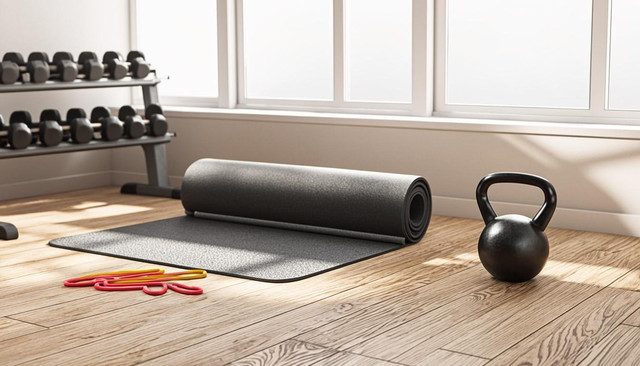
Before any equipment, you need a decent floor surface. A good gym mat protects your floor from sweat and dropped equipment, gives you grip for bodyweight movements, and provides cushioning for floor work. A single large rubber mat or a set of interlocking foam tiles works for bodyweight training and light dumbbells. If you plan to do barbell work or drop weights, you need proper rubber gym flooring, at least 15 millimeters thick.

Do not skip this step. Working out on carpet or hardwood damages both the floor and your equipment, and it makes movements like lunges and planks uncomfortable. A dedicated mat also signals to your brain that this is a workout space, which helps with consistency.

Adjustable Dumbbells Save Space and Money

A set of adjustable dumbbells is the single highest-leverage purchase for a home gym. One pair replaces an entire rack of fixed dumbbells, taking up a fraction of the space. Modern adjustable dumbbells from brands like Bowflex, PowerBlock, and Nuo allow you to change weight in seconds, making them practical for circuit training and drop sets.

Look for a set that goes from at least 2 to 22 kilograms per hand. That range covers everything from light isolation work to fairly heavy compound lifts for most people. The trade-off is that adjustable dumbbells are slower to change than fixed ones, and they are more expensive than a few pairs of cheap fixed dumbbells. If you have space and budget, a few pairs of fixed dumbbells in your most-used weights plus an adjustable set for the rest is the ideal setup.

Add Versatility With a Few Key Accessories

Beyond dumbbells, a small set of accessories dramatically expands what you can do. A set of resistance bands handles warm-ups, mobility work, and exercises like pull-aparts and face pulls that are hard to replicate with dumbbells. A yoga mat is essential for floor work and stretching. A doorway pull-up bar gives you a pulling movement that dumbbells alone cannot easily provide.

A kettlebell in the 12 to 16 kilogram range is the final piece. Kettlebell swings, goblet squats, and Turkish get-ups are some of the most efficient full-body movements you can do at home, and a single kettlebell covers a surprising range of training. With these pieces, a mat, adjustable dumbbells, bands, a pull-up bar, and a kettlebell, you can build strength, conditioning, and mobility for years without ever setting foot in a commercial gym. Add equipment slowly as you discover what you actually use, not what you think you might use.