
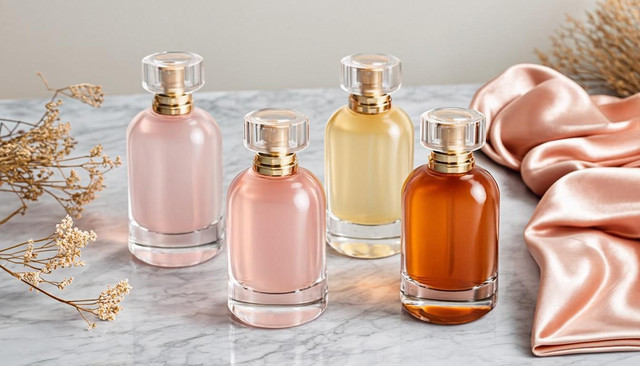
Shopping for fragrance can feel overwhelming because the vocabulary is opaque and the options are effectively infinite. Walk into any department store beauty hall and you are confronted with hundreds of bottles, each described in language that sounds more like poetry than product information. The shortcut through all of this is understanding fragrance families. Once you know the five main categories and which one you gravitate toward, the search narrows from hundreds of options to a manageable handful.
Fragrance families are simply groups of scents that share similar characteristics, usually defined by their dominant notes. Most perfumes belong primarily to one family, with secondary notes that add complexity. Here is a practical guide to the five main families, what they smell like, and how to figure out which one is yours.
Floral: The Largest and Most Diverse Family
Floral fragrances are exactly what they sound like: scents built around flowers. This is the largest fragrance family, ranging from light and breezy single-flower scents to rich, complex bouquets. Rose, jasmine, peony, and tuberose are common notes. Florals tend to be approachable and crowd-pleasing, which is why they dominate the women’s fragrance market.
If you like scents that smell like a garden, that read as feminine without being overly sweet, and that work in both casual and formal settings, floral is likely your family. Within florals, lighter interpretations like peony or freesia suit daytime, while heavier flowers like tuberose and jasmine are better for evening.
Woody: Warm, Grounded, and Modern
Woody fragrances are built around notes like sandalwood, cedar, vetiver, and patchouli. They smell warm, dry, and grounded, like a forest floor or a worn leather chair. Woody scents have become increasingly popular in the last decade as the line between traditionally masculine and feminine fragrances has blurred. They are sophisticated without being loud and tend to last well on the skin.
If you find florals too sweet or too obvious, woody fragrances are worth exploring. They work particularly well in cooler months and evening settings, though lighter interpretations like cedar and cypress can be worn year-round. Unisex woody scents are some of the most universally flattering options available.
Oriental, Fresh, and Gourmand
The remaining three families round out the spectrum. Oriental fragrances are warm, spicy, and resinous, built around notes like amber, vanilla, incense, and exotic spices. They are intense, sensual, and best suited to evening wear or colder weather. Fresh fragrances include citrus, aquatic, and green scents, the kind of things that smell like clean laundry, ocean air, or freshly cut grass. They are perfect for hot weather, gym bags, and people who do not want to smell like they are wearing perfume.
Gourmand fragrances smell edible, with notes of vanilla, caramel, chocolate, and coffee. They have become hugely popular in the last decade but can be polarizing. If you love the idea of smelling like a bakery, this is your family; if not, you will find them cloying. To find your signature scent, identify which family appeals most, then sample three or four fragrances within that family on your skin over a few days. Skin chemistry changes everything, so what smells great on a strip might be different on you. Take your time, and the right one will reveal itself.