
Posted on Leave a comment

How to Choose a Backpack That Lasts Beyond the Hype

Backpacks are one of those purchases where it is easy to spend too little and end up replacing the bag every two years, or spend too much on a trendy label and end up with something that does not actually fit your life. The sweet spot is a well-made bag from a brand with a real warranty, in a design that handles how you actually carry things day to day. Here is how to find one that will still be in service a decade from now.

The backpack market has exploded in the last few years with crowdfunding campaigns and direct-to-consumer brands promising the perfect everyday carry. Most of them are fine, but only a few are genuinely built to last. The trick is knowing which features matter for durability and which are just marketing.

Material and Construction: What Actually Lasts

The two main material choices are nylon and canvas, with leather as a third option for more formal styles. For everyday use, 500D or 1000D Cordura nylon is the gold standard for durability. It resists abrasion, water, and tearing better than almost anything else. Canvas, particularly waxed canvas, develops a beautiful patina over time and is a great choice if you want a bag that ages well rather than staying pristine.

Construction matters as much as material. Look for double or triple stitching at stress points, particularly where the straps attach to the body of the bag. YKK zippers are the industry standard for a reason; avoid bags with no-name zippers. Bar tacks (those dense stitched rectangles at stress points) are a sign of a well-made bag. If you can see the inside of the bag, look for taped or bound seams rather than raw edges that will fray.

Capacity and Organization: Right-Sizing for Your Life

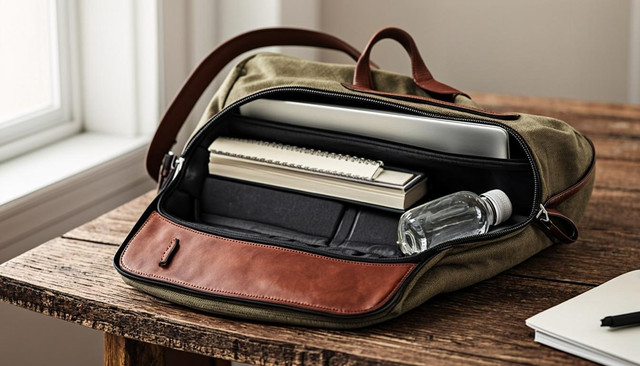
The most common mistake is buying a bag that is too big. A 30-liter backpack is great for a weekend trip but absurd for a daily commute. For most people, a 20-25 liter everyday backpack is the sweet spot. It holds a laptop, a change of clothes, a water bottle, and the small stuff you carry without bulging or feeling empty.

Organization is personal. Some people want a pocket for everything; others prefer a single large compartment with one or two smaller pockets for valuables. Think about how you actually use a bag. If you constantly rummage for your keys or wallet, look for a bag with quick-access pockets on the exterior. If you carry a laptop, make sure the sleeve is padded on both sides and suspended above the bottom of the bag so the laptop does not hit the floor when you set the bag down.

Comfort and Warranty: The Long-Term View

A backpack you carry for hours needs to be comfortable. Look for padded shoulder straps with a curve that matches your shoulders, a sternum strap for heavier loads, and a back panel with some structure and ventilation. The bag should sit against your upper back, not sag down to your lower back, which causes strain over time. Try the bag with weight in it before committing.

Finally, check the warranty. Brands like Patagonia, Peak Design, Tom Binh, and Osprey offer lifetime or near-lifetime warranties that cover manufacturing defects and often normal wear. A warranty is a signal that the brand expects the bag to last, and it is your insurance against the small failures that kill cheaper bags. Spend a bit more upfront for a bag backed by a real warranty, and you will save money in the long run.
Posted on Leave a comment

Watch Buying Guide: Mechanical vs Quartz for Everyday Wear

If you are shopping for your first proper watch, or upgrading from a smartwatch to something more permanent, you will quickly run into the great debate of horology: mechanical or quartz. The discussion gets heated online, but the practical answer is much simpler than forum threads make it sound. Both have real advantages, and the right choice depends entirely on what you want from a watch, not on which technology is objectively better.

Here is a practical breakdown of how mechanical and quartz watches actually differ in everyday use, what each is best at, and how to decide which one deserves a place on your wrist.

Quartz: Accurate, Affordable, and Low Maintenance

Quartz watches are powered by a battery sending electrical current through a quartz crystal, which vibrates at a precise frequency and drives the seconds hand. The result is a watch that is accurate to within a few seconds a month, costs relatively little to manufacture, and requires almost no attention from the owner beyond a battery change every couple of years.

For most people, quartz is the rational choice. A good quartz watch from a reputable brand will outperform a mechanical watch at ten times the price on every objective measure: accuracy, reliability, cost of ownership. If you want a watch you can pick up after not wearing it for three weeks and have it show the correct time, quartz is the answer. The downside is that quartz movements are less romantic, lack the craftsmanship narrative that mechanical watchmakers trade on, and typically have less resale value.

Mechanical: Craftsmanship You Can Feel

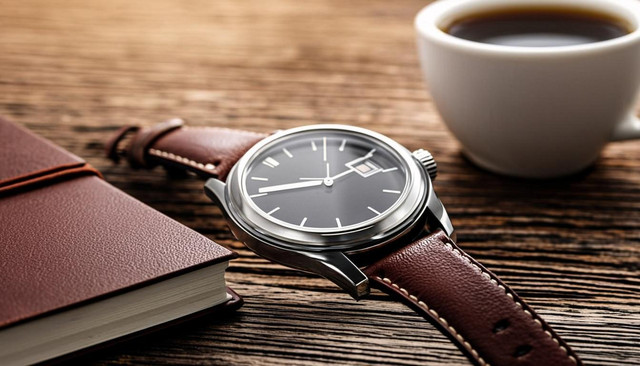
Mechanical watches are powered by a mainspring wound either by hand or by the motion of your wrist (in the case of automatics). Inside is a tiny, intricate mechanism of gears, jewels, and springs that has been refined for centuries. Mechanical watches tick several times per second, giving the seconds hand a smooth sweep rather than the one-tick-per-second of quartz.

The appeal of mechanical watches is not objective performance. It is the romance of wearing a centuries-old technology on your wrist, the appreciation of human craftsmanship, and the way a mechanical watch becomes something you maintain and pass down rather than dispose of. The trade-offs are real: mechanicals are less accurate, more expensive to service, sensitive to magnetism and shock, and will stop if not worn or wound regularly.

How to Choose for Everyday Wear

If you want one watch to wear every day, with minimal thought and maximum reliability, buy quartz. A high-quality quartz watch from brands like Grand Seiko, Cartier, or Omega will give you years of trouble-free service and look fantastic. If you want a watch that tells a story, that you will maintain and cherish, and that connects you to a tradition of mechanical craftsmanship, buy mechanical.

Many serious watch enthusiasts end up owning both. A grab-and-go quartz for busy mornings and travel, and a mechanical for evenings, weekends, and moments when you want to appreciate the watch on your wrist. There is no wrong answer here, only the answer that fits your life. Try on watches in both categories before you buy, because how a watch feels on your wrist matters more than any specification.